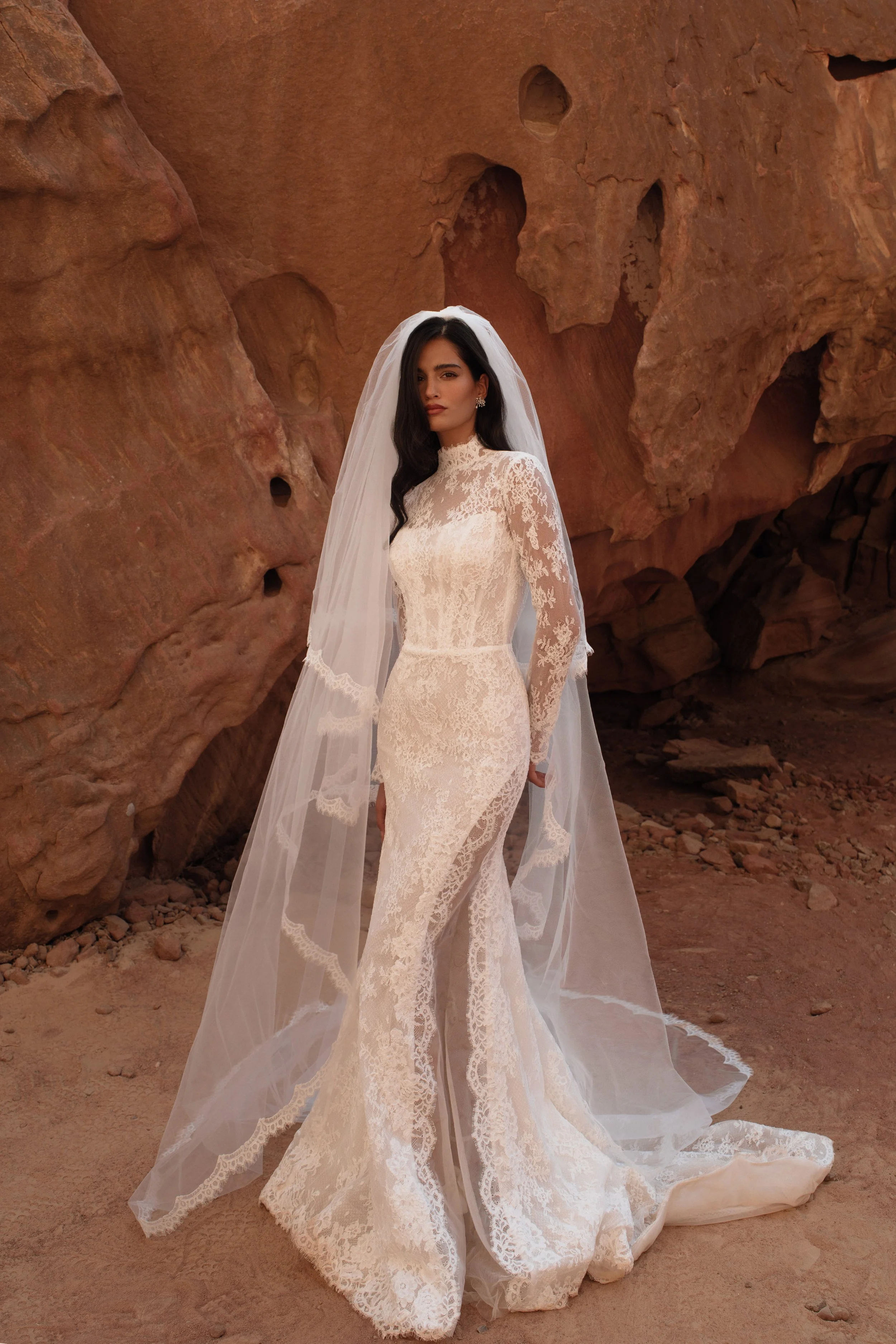
Wedding dress alterations in South Africa typically take between four and eight weeks from first fitting to final collection. The exact timeline depends on how much work your dress requires, your seamstress's schedule, your schedule and how far out your wedding date falls. Here is what to expect at each stage.
Why Alterations Are Almost Always Necessary
Designer wedding gowns are produced in standard sizes. Almost no bride is a perfect match for a standard size across her full body. The job of alterations is to make a gown fit one specific woman's proportions perfectly: her shoulders, bust, waist, hips, and height.
Even a bride who wears a size 10 in everyday clothing for example will usually need at least a hem adjustment and a bodice take-in or let-out. Expecting a Made-to-Order dress to fit perfectly without alterations is not realistic at the premium end of the market.
Typical Alteration Timeline, although it can be less or more appointments depending on the complexity of the alterations required
First fitting (6 to 8 weeks before the wedding): Your dress arrives from the designer. Your seamstress conducts a full assessment, hem length, bust, waist, back closures, strap adjustments. Pins are placed and measurements recorded. The dress goes back for work.
Second fitting (3 to 4 weeks before the wedding): Initial alterations are assessed. Most of the structural work should be done. Further refinements are identified, usually minor adjustments to fit or comfort. The bustle (if applicable) is installed and tested.
Final fitting (1 to 2 weeks before the wedding): The dress should be collection-ready. You will try it on in full, with your shoes and planned undergarments, and do a final walk-through. Minor last-minute adjustments (a hook, a strap, a hem thread) can be made at this stage.
What Affects the Timeline
- Complexity of the gown A plain silk slip requires far less work than a heavily beaded ballgown. Complex embellishment around alterations areas (bust, hem) significantly increases labour time.
- How much the size needs to change Taking a dress in by one size is straightforward. Letting it out by more than one size may be impossible without introducing visible seam lines.
- Whether structural work is needed Adding boning, replacing a zip with a corset back, or extending a train all add time.
- Seamstress availability In peak wedding season (October to April in South Africa), boutique seamstresses are heavily booked. Order your dress with enough lead time to secure early alteration slots.
Alteration Costs in South Africa
Budget between R2 000 and R8 000 for a standard set of alterations, hem, bust, waist, and back adjustment. Complex structural work or heavily embellished gowns can cost more. Boutiques that handle alterations in-house offer a significant advantage: your seamstress has direct access to your stylist, and the quality of fit is held to the boutique's standard rather than an external third party.
What Brides Get Wrong About Timing
The most common mistake is ordering a dress too late and leaving insufficient time for alterations. If your gown arrives from the designer eight weeks before your wedding, and alterations take six weeks, you have a very narrow safety margin. Order your dress at least eight months before your wedding date to allow for production time (four to six months) plus the full alterations cycle.
Questions about your specific timeline? Book a consultation with our team and we will map out the exact schedule for your dress and your date.