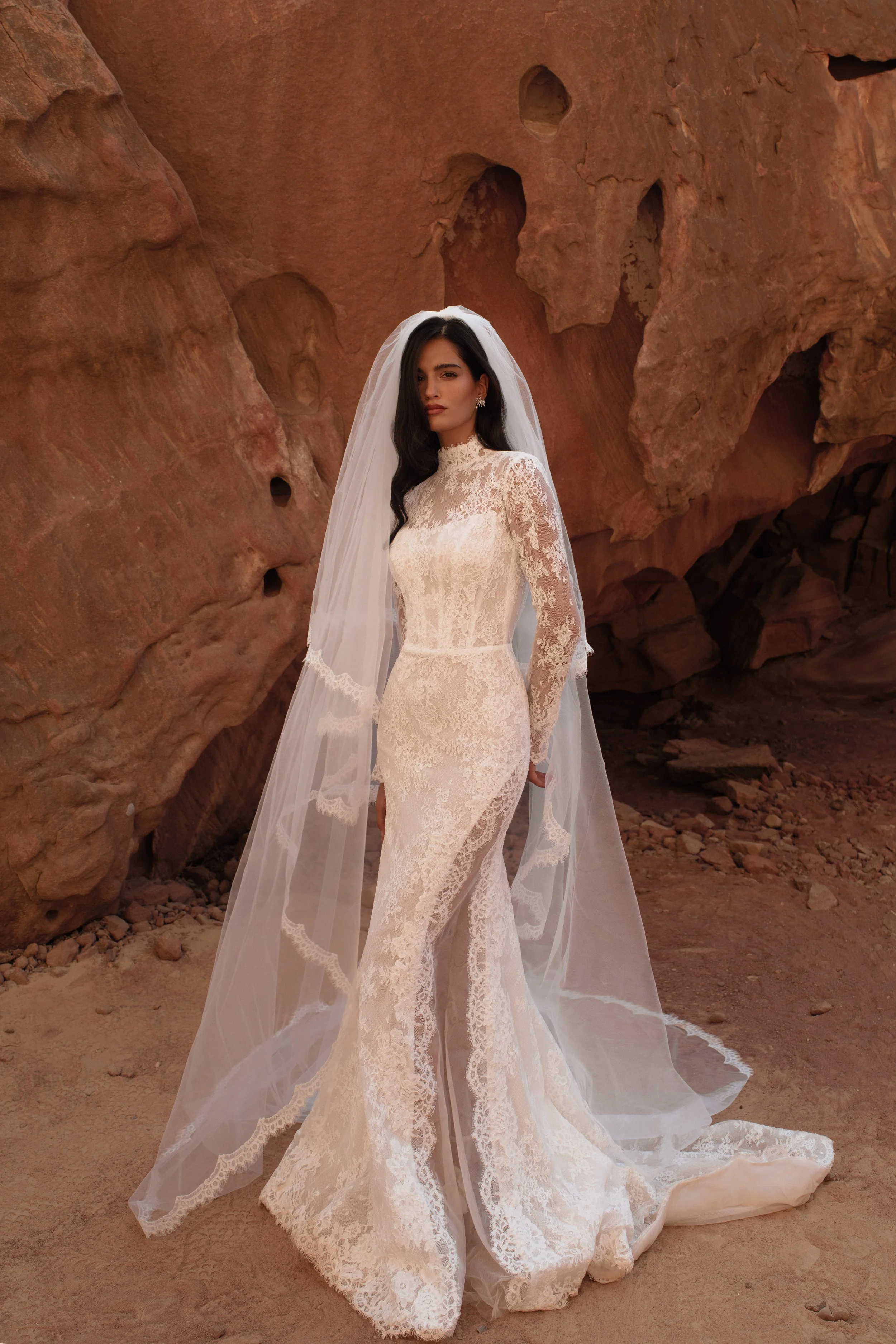
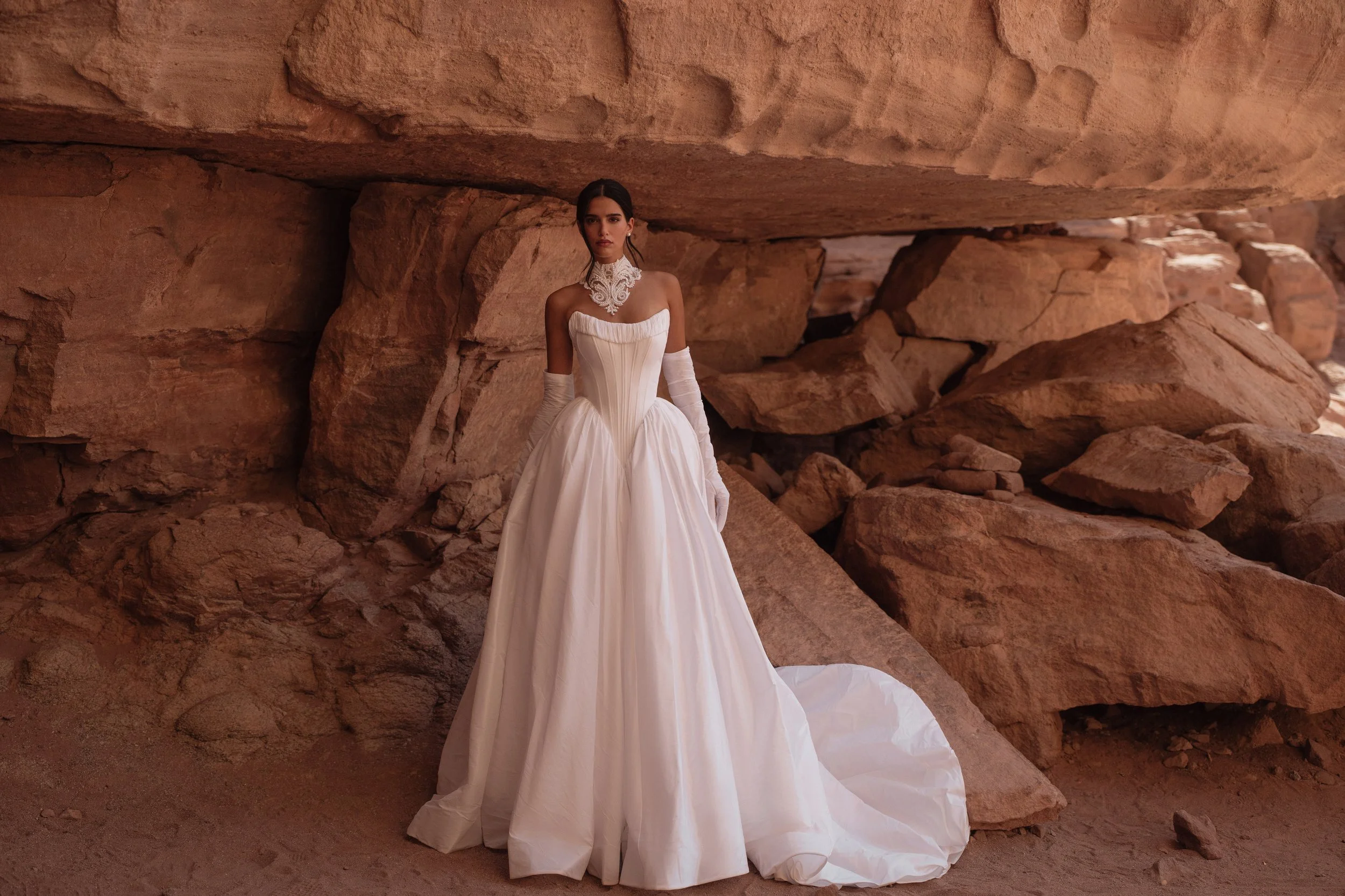
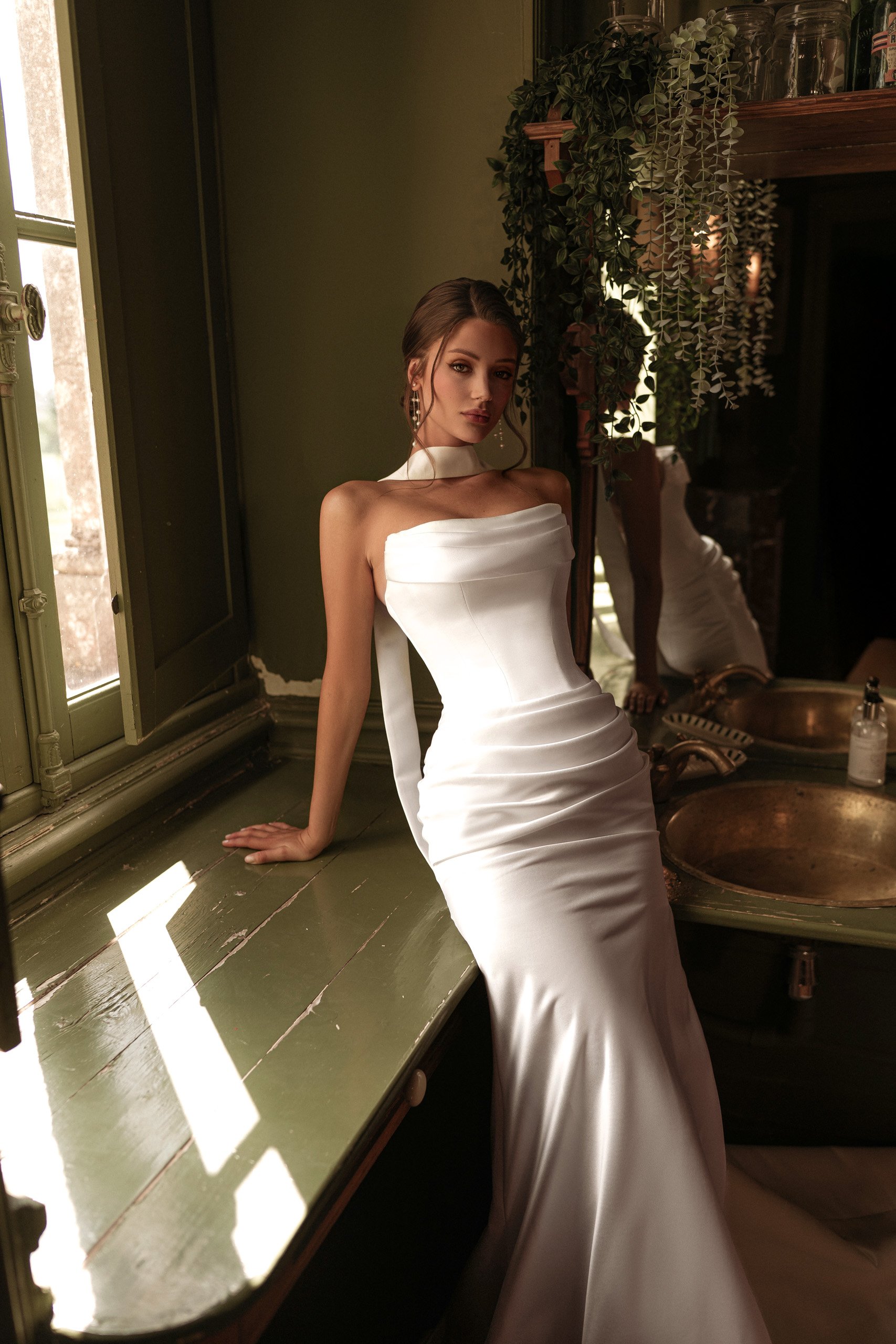
One of the biggest surprises for brides? Your made-to-order wedding dress will almost certainly need alterations.
Even if your gown is ordered in your size. Even if you “fit perfectly” in the sample. Even if you haven’t changed weight. And contrary to what many brides expect, alterations are not a quick little hem and done situation. Bridal alterations are a highly specialised process that can dramatically affect how your gown looks, fits, and feels.
At The Wedding Collective, we often say: the dress arrives beautiful… but alterations are what make it yours.
Here’s what most brides are never told about bridal alterations before they start wedding dress shopping.
Wedding Dresses Are Not Made to Your Exact Measurements
This is one of the biggest misconceptions in bridal. Most made-to-order designer gowns are ordered according to standard designer sizing based on your closest measurements not custom-tailored precisely to your body.
Why?
Because every body is unique. Height, posture, bust shape, torso length, hip placement, shoulder width, and proportions all affect fit differently. Alterations are what refine the gown specifically to your body. That final fitting process is where the magic happens.
Bridal Alterations Are Extremely Technical
A wedding dress is not constructed like normal clothing. Many gowns contain:
Internal corsetry
Boning
Multiple layers
Delicate lace
Beading
Structured cups
Horsehair hems
Complex draping
Altering bridal gowns requires someone who understands bridal-specific construction. A good bridal seamstress is honestly worth her weight in gold.
Because a poorly altered gown can completely change:
the silhouette,
the support,
the neckline,
the balance,
and even how expensive the dress looks.
Alterations Are Almost Never “Cheap”
This shocks many brides. But bridal alterations are skilled labour and often extremely time-consuming.
For example:
Hemming a multilayer gown can take hours
Reworking lace appliqué is delicate handwork
Restructuring bodices can require partial reconstruction
Bustles involve engineering the train for movement
The more intricate the gown, the more labour-intensive the alterations usually become.
This is why alteration costs can vary dramatically depending on:
the gown construction,
fabric,
detailing,
silhouette,
and the changes required.
Weight Loss Plans Can Complicate Things
This is the part brides don’t always want to hear. Many brides buy their dress planning to “lose a lot of weight” before the wedding. But significant body changes can actually make alterations more difficult, especially with highly structured gowns.
A gown can usually be altered smaller within reason, but dramatic size changes may:
affect proportions,
distort lace placement,
compromise support,
or require major reconstruction.
And making a dress bigger is often even more difficult because seam allowance is limited. The healthiest approach? Order the gown for the body you have now, not the body you’re hoping to have under wedding planning stress.
Not Everything Can Be Altered
This is probably the most important thing brides should understand. Pinterest can sometimes create unrealistic expectations around alterations. While many adjustments are possible, some changes are extremely difficult or not recommended at all.
For example:
Completely changing silhouettes
Turning strapless gowns into structured sleeves
Dramatically lowering backs
Rebuilding necklines
Making gowns several sizes bigger
Recreating entirely different dress designs
At a certain point, you are no longer “altering” a gown, you are redesigning it. And that’s a completely different process.
Timing Matters More Than Brides Think
Bridal alterations should never be left to the last minute.
Ideally:
your gown arrives months before the wedding,
fittings are spaced properly,
and there is room for adjustments without panic.
Rush alterations create stress for everyone involved, especially when intricate handwork is required. A calm timeline almost always produces better results.
Your Wedding Shoes Matter
This sounds obvious, but you would be surprised how many brides arrive at fittings without their shoes.
Your hem length depends entirely on:
shoe height,
posture,
and how the gown falls while walking.
Changing shoes after alterations can completely affect the hemline.
The Goal Is Not “Perfect.” The Goal Is Beautifully Fitted.
This is important. Wedding gowns are handcrafted garments worn by real human beings not digitally edited Pinterest images. A gown should fit beautifully, comfortably, and securely. But brides often become hyper-focused on tiny details during fittings that nobody would ever notice in real life. Sometimes the final fitting process can feel emotional because brides are seeing themselves under bright lights, close-up, while focusing on tiny technical adjustments.
That is completely normal.
The Right Alterations Can Completely Transform a Dress
This is the good news.
A properly altered gown can:
elevate the fit,
improve comfort,
enhance confidence,
and make a dress feel like it was made specifically for you.
That’s why bridal alterations are not an “extra.” They are part of the journey.
And honestly? Some of the most stunning bridal transformations happen during the fitting process.
Because that’s the moment the dress stops being a dress… and starts becoming your dress.