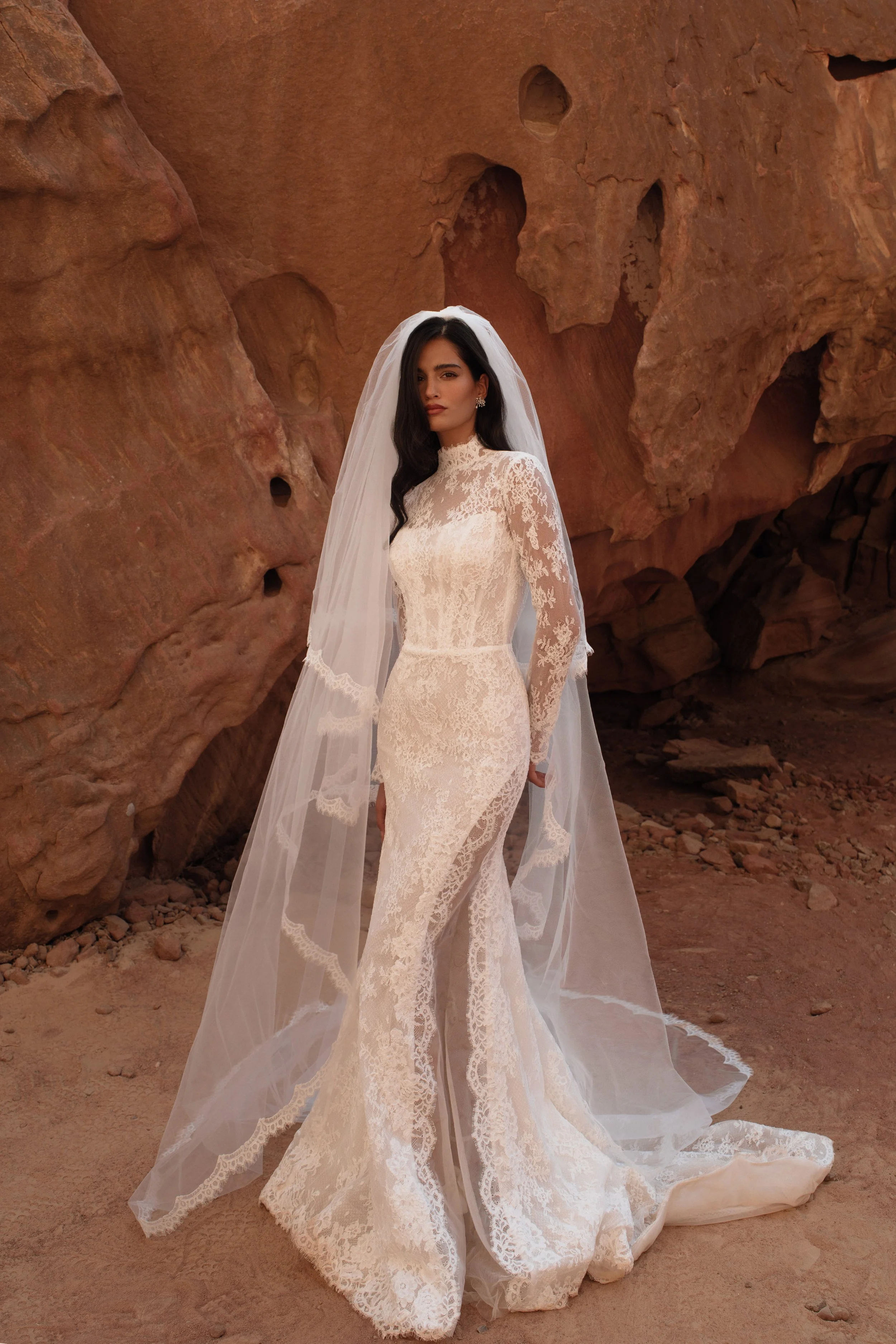
The single most important step in preserving your wedding dress is to clean it as soon as possible after the wedding, ideally within two weeks. Stains that seem invisible when dry become permanent within weeks to months as sugars, salts, and oils oxidise into the fabric. Everything else in the preservation process matters less than this first step.
Why Preservation Matters
A wedding dress left uncleaned and stored in a regular box will yellow within years, even if it looks clean. Body oils, perspiration, wine, champagne, and food residue are largely invisible once dry, but they oxidise over time and cause irreversible discolouration. Silk and lace are particularly vulnerable. A properly preserved gown can last fifty years or more; an improperly stored one may be unwearable within five.
Step 1: Professional Cleaning
Do not attempt to spot-clean or hand-wash a designer gown at home. Take it to a dry cleaner who specialises in bridal gowns, not a general dry cleaner who handles suits and everyday clothing. Bridal specialists understand how to treat beading, lace, silk charmeuse, and tulle without damaging the fabric or embellishments.
In South Africa, expect to pay between R800 and R2 500 for professional bridal cleaning depending on the complexity of the gown. This is not an area to economise on.
Ask the cleaner specifically:
- Do you inspect the dress for damage before and after cleaning?
- Do you clean the hem and train separately?
- Will you treat invisible stains (sugar-based substances) as well as visible ones?
- Can I see the dress before it is boxed?
Step 2: The Right Storage Box
Once cleaned, your dress should be stored in an acid-free, archival-quality box. Standard cardboard boxes contain acids that transfer to fabric over time and accelerate yellowing. An archival box is made from pH-neutral materials that will not react with your dress.
The dress should be wrapped in acid-free tissue paper, never regular tissue, which also contains acids, before being folded into the box. Some preservationists recommend stuffing the bodice with tissue to maintain its shape. Do not use plastic bags or plastic wrapping, which trap moisture and cause mould.
Step 3: The Right Environment
Store your box in a cool, dry, dark space. A bedroom wardrobe is usually fine; an attic, garage, or storage unit with temperature fluctuations is not. High humidity causes mould; high heat accelerates yellowing; direct light causes bleaching and colour shift.
Check on your dress every year or two. Remove it from the box, air it gently, re-fold it in a different configuration (to prevent permanent fold lines), and rebox it with fresh tissue.
Common Mistakes to Avoid
- Sealing the box without inspecting it first. Some preservation services seal the box and tell brides never to open it. This is a sales tactic, not a preservation principle. You should be able to inspect your dress at any time.
- Storing it in a vacuum bag. Vacuum storage compresses fibres in a way that can permanently damage delicate fabrics like organza and tulle.
- Waiting months before cleaning. Every week that passes makes stain removal harder. Aim to have your dress cleaned within two weeks of the wedding.
- Using wooden hangers or cedar for long-term storage. Wood and cedar contain aromatic oils that transfer to fabric. Use a padded, fabric-covered hanger if hanging, or lay the dress flat in its box.
When to Consider Restoration vs. Preservation
If you are working with a dress that has already yellowed or been stored incorrectly, restoration is a different service from preservation, it involves brightening, stain treatment, and sometimes structural repair. This is specialised work and costs significantly more than standard cleaning. Seek out a bridal restorer rather than a general cleaner for this level of work.
Questions about your dress after your wedding? Get in touch with The Wedding Collective team we are here for the whole journey, not just the appointment.